Serviceton
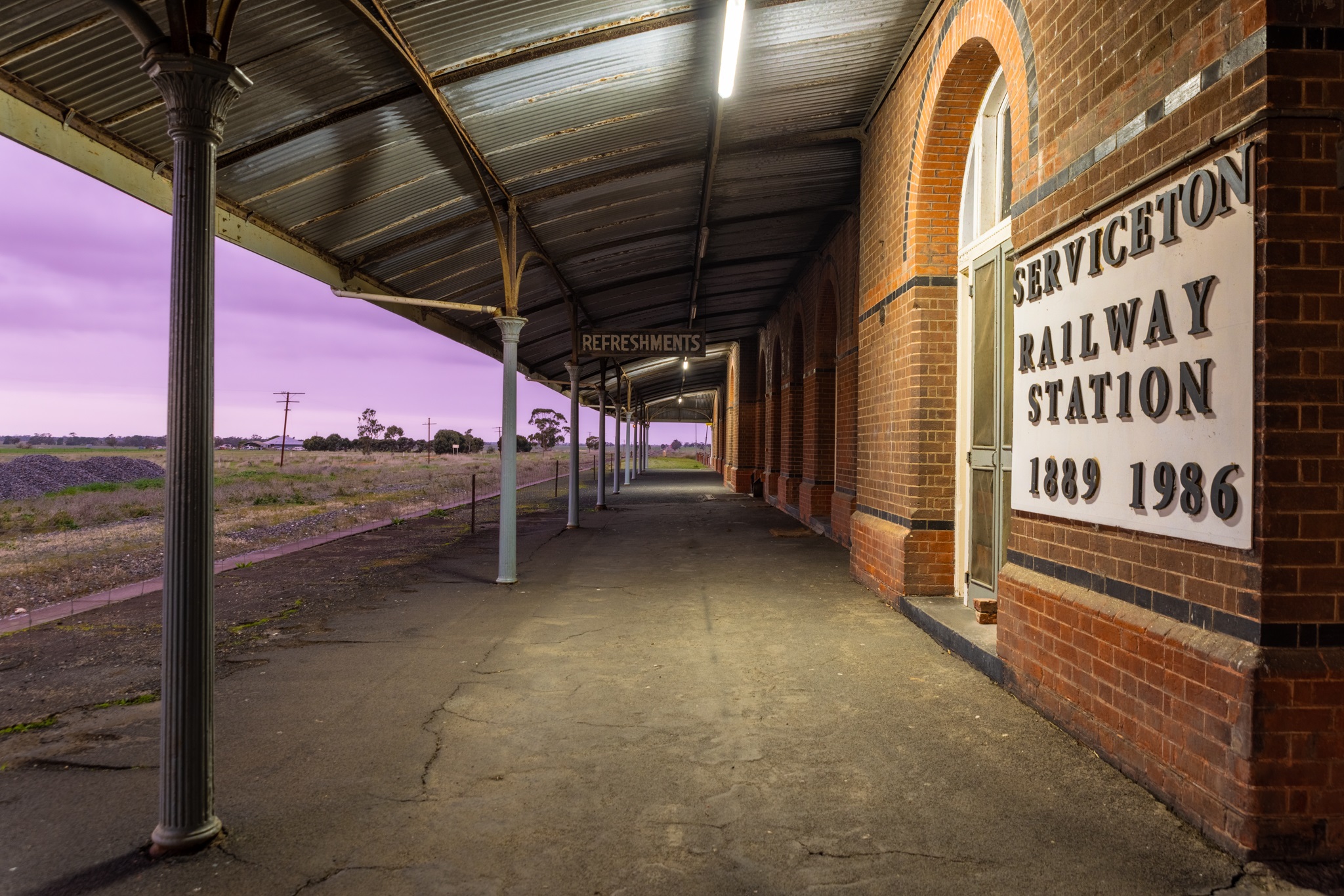
Serviceton’s grand old railway station stands as one of Australia’s most remarkable and storied landmarks. Built in 1889, this heritage-listed red-brick building boasts 33 rooms and 28 fireplaces, and once housed a customs office positioned right on the disputed border between Victoria and South Australia.
Though passenger trains like the Overland still pass through on the Melbourne–Adelaide line, they haven’t stopped here since 1986. Today, Serviceton Railway Station is a living museum, remarkably preserved, where visitors can explore tales of train crashes, ghost stories, and the unusual basement holding a jail and a morgue once used for interstate prisoners and deceased passengers.
The station’s refreshment rooms closed in 1981, a loss mourned in Tom Waits’ song “Town with No Cheer.” Yet the town has found new hope as its grain silo becomes part of the Silo Arts Trail, bringing fresh attention and vibrancy to this quiet border village.
Serviceton Silo Art
Painted in 2025 by artist Jack Fran and delivered by ArtAid in partnership with West Wimmera Shire Council and GrainCorp, the Serviceton silos showcase artwork inspired by the town’s unique past. The mural depicts the story of the border dispute and the work of surveyors Wade and White, who played a central role in defining the boundary between Victoria and South Australia.
Visitors can view the artwork safely from the Serviceton Railway Station precinct, where the scale and detail of the mural can be fully appreciated.
Serviceton began as a crucial railway town in the 1880s, strategically located in a 4.5 km-wide strip of disputed land between the two colonies. The customs house served to regulate goods crossing the border, though a surveying error led to ongoing confusion and smuggling until the boundary was legally settled in 1913. The railway’s arrival spurred growth with stores, a post office, hotels, and other services, turning Serviceton into a bustling border hub.
Today, the town retains its rural charm with only a handful of residents, offering visitors a glimpse into a unique piece of Australian railway and colonial history. Nearby, the Tolmer Rest Area commemorates the gold escort route that once brought fortune through this region.